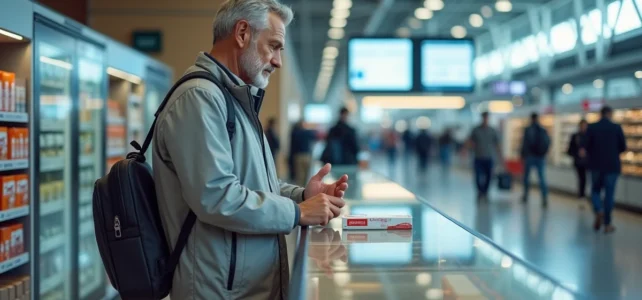
The price of a pack of cigarettes in Switzerland is around 9 to 10 CHF for a brand like Marlboro, which is slightly lower than the French price converted into euros. This price difference attracts cross-border workers and travelers each year who hope to save money, either duty-free or directly at a Swiss tobacco shop. The actual calculation is more complex than a simple price difference.
Swiss customs allowance: the threshold that changes everything
Before comparing prices, the first concept to master is the allowance of 250 cigarettes per person per day upon entering Switzerland. This threshold, set by the Federal Customs Administration, corresponds to just over one carton (12.5 packs of 20 units).
Beyond this allowance, each additional cigarette is taxed at 0.25 CHF per unit. On a full carton of 200 cigarettes exceeding the allowance, the surcharge reaches 50 CHF, which nullifies any price advantage.
The frequent confusion arises from the fact that this allowance applies to imports into Switzerland (for example, from Germany or France), and not on the return to France. The rules change depending on the direction of travel, and this is precisely where travelers get it wrong. An article detailing the price of cigarettes in Switzerland 2026 on Econozen goes over these taxation mechanisms at both borders.
Price of cigarettes in Switzerland converted to euros: a gap that is narrowing
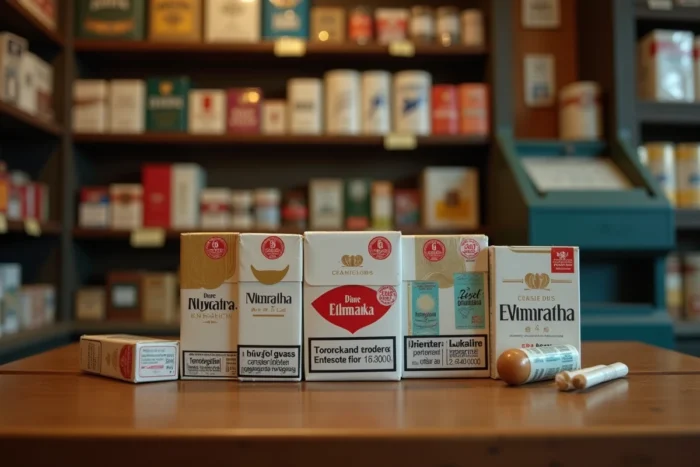
The pack of Marlboro in Switzerland is around 9.76 CHF according to available data. Converted at the current exchange rate, this amount is close to the French price, which now exceeds 12 euros after successive increases in early 2026 (January, February, March).
The gap exists, but it only represents a few euros per pack. For a purchase of two or three packs, the savings remain marginal. It only becomes significant for larger volumes, which face customs limits.
The trap of the exchange rate
The Swiss franc fluctuates against the euro. A traveler paying in CHF with a French bank card incurs conversion fees (often between 1 and 3% depending on the bank). This additional cost, rarely anticipated, eats into the already modest price difference between the two countries.
Paying in cash with Swiss francs obtained from a currency exchange incurs another type of fee. In both cases, the actual price paid in euros exceeds the price displayed in the shop window.
Duty-free at Swiss airports: attractive prices under conditions
The duty-free shops at Swiss airports (Geneva, Zurich) offer tax-free cigarettes, generally at a price lower than that in tobacco shops. The principle of duty-free relies on the exemption from local taxes, which visibly lowers the price.
Here are a few points to check before buying:
- The duty-free is only accessible to passengers departing to a destination outside Switzerland, after security control
- The quantities purchased are subject to the import rules of the destination country, not those of Switzerland
- For a return to France from a non-EU country (Switzerland is not a member of the European Union), the tobacco allowance is significantly more restrictive than between European countries
A traveler returning to France from Geneva or Zurich is subject to the “third country” import thresholds. The quantity allowed without declaration or taxation is one carton (200 cigarettes). Any excess is subject to confiscation and fines.
Returning to France from Switzerland: the reality of customs passage
Since Switzerland is not a member of the EU, returning to France follows the rules applicable to third countries. This is a point that many cross-border workers underestimate.
The tobacco allowance for an adult traveler is limited to 200 cigarettes (one carton) or 250 grams of rolling tobacco. Beyond this, French customs apply duties and taxes that can represent several euros per additional pack.
Increased checks at border posts
The customs posts between Switzerland and France (Annemasse, Saint-Julien, Bardonnex, Basel) conduct regular checks. Agents primarily target tobacco and alcohol purchases. A detected excess of the allowance results in:
- Seizure of the excess products
- Immediate payment of customs duties and French VAT
- A fine that can amount to several times the value of the products in case of repeat offenses or quantities deemed commercial
The financial risk far exceeds the expected savings on two or three cartons.

Buying in Switzerland or duty-free: a real advantage only in a specific context
Buying cigarettes in Switzerland or duty-free remains interesting in only one scenario: a traveler who stays within the limit of one carton and who would have bought tobacco on-site during their stay anyway. In this case, the savings compared to French prices are a few euros per carton, varying according to the exchange rate of the day.
For cross-border workers who cross the border daily, the allowance of 200 cigarettes applies to each crossing. Accumulating purchases over several days is theoretically possible, but French customs monitor repetitive habits and may reclassify personal use as abusive importation.
The price gap between Switzerland and France, once more pronounced, is narrowing year by year. The successive French increases in 2026 have raised the hexagonal rate, but Switzerland is also discussing plans to increase tobacco taxation. A pack at 12 CHF is no longer a distant scenario. The border advantage, already slim, could simply disappear.