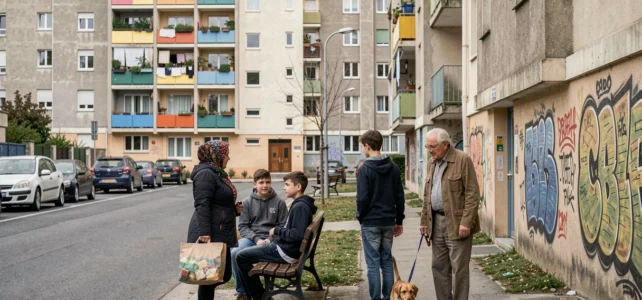
La Paillade is one of those names that immediately triggers a reaction in Montpellier. A popular neighborhood built in the 1960s to accommodate repatriates from Algeria, it has carried a reputation as an area to avoid for decades. This reputation is largely based on fixed representations, which the recent transformations of the neighborhood compel us to reconsider.
Urban renovation in La Paillade: what the ANRU program changes concretely
The neighborhood is officially classified as a priority neighborhood for urban policy (QPV). This classification is not symbolic; it triggers funding and obligations for public intervention.
La Paillade is the subject of a national urban renovation program (ANRU) that includes demolitions, reconstructions, and the redesign of public spaces. The stated goal is to open up the neighborhood and diversify the housing offer. In other words, public authorities do not see La Paillade as a lost cause, but as a priority for investment.
The topic surrounding the La Paillade market as a dangerous neighborhood often comes up in searches, but it masks this reality: a neighborhood that is the subject of such a program is a neighborhood in transformation, not an abandoned one.
Precariousness and youth: the real indicators behind the feeling of insecurity
Why does La Paillade provoke a stronger feeling of insecurity than other popular neighborhoods in Montpellier? The answer does not solely lie in crime statistics. It is due to a concentration of social factors that national averages do not reflect.
The neighborhood has a poverty rate significantly higher than the national average. The population is also younger than in the rest of the city. These two combined elements create an environment where precariousness is visible in public spaces: groups of idle young people, closed shops, dilapidated buildings.
The problem with this visibility is that it fuels a disproportionate perception of danger. A downtown resident crossing La Paillade for the first time sees signs of poverty and interprets them as signals of threat. This is a known mechanism in urban sociology, and it works both ways: residents of La Paillade may perceive downtown as a hostile or excluding space.
What crime statistics do not reveal
The data recorded by security services measure reported incidents. However, in priority neighborhoods, underreporting is common. Some residents do not file complaints out of habit, distrust of institutions, or fear of reprisals.
Conversely, the media coverage of certain incidents amplifies the perception of danger well beyond statistical reality. A drug-related settling of scores makes the regional headlines, while months of relative calm go unnoticed.
Daily life in La Paillade: what residents really describe
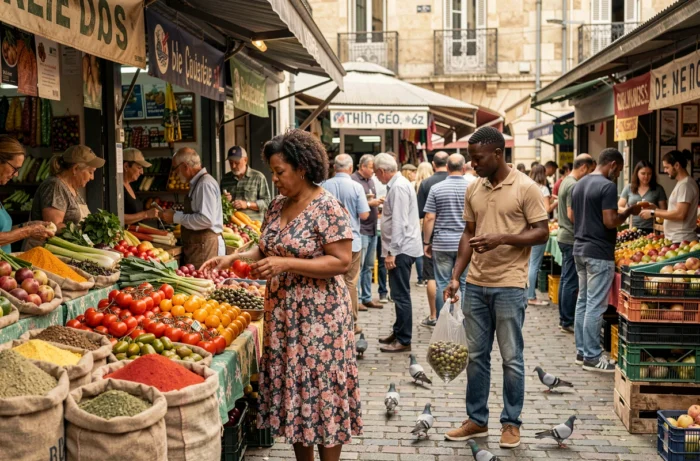
The accounts collected by media outlets like France Culture or Midi Libre paint a more nuanced picture than just security concerns. Several residents mention a neighborhood where solidarity among neighbors remains strong, where local businesses (bakeries, grocery stores, markets) thrive, and where local associations maintain cultural and sporting life.
Some former residents who returned after several years of absence describe a territory more peaceful compared to previous periods, but where social diversity has decreased and the economic situation remains concerning.
- The cultural diversity, once notable (families from very diverse backgrounds), has diminished with the gradual departure of the middle classes.
- The childhood memories of former residents are often positive, centered around school and street sports, far from the image of a “lawless zone.”
- The feeling of abandonment by public authorities recurs in most testimonies, more than the fear of violence.

Security in Montpellier: La Paillade compared to other sensitive neighborhoods
Reducing the question of security in La Paillade would be misleading. Montpellier has several other areas classified as QPV or frequently mentioned in crime reports: Petit Bard-Pergola, the Cévennes, or certain sections of Figuerolles.
La Paillade is neither the safest nor the most dangerous neighborhood in Montpellier. Its notoriety is more due to its size (around 20,000 inhabitants, making it the largest priority neighborhood in the city) than to a systematic overrepresentation in crime incidents.
The role of drug trafficking
Drug trafficking exists; no one disputes that. Deal points are identified and subject to regular police operations. However, this phenomenon concerns most of the large popular neighborhoods in French metropolitan areas.
What distinguishes La Paillade is the geographical concentration of trafficking at a few specific points. The rest of the neighborhood lives at a different pace, with quiet streets, families going to school, and retirees shopping at the market.
The question “Is La Paillade dangerous?” thus calls for a two-part answer. For a resident living far from deal points and not involved in any network, the risk of being assaulted remains comparable to that in other popular neighborhoods. For those involved in the underground economy or living in close proximity to sales points, the danger is real and documented.
Answering yes or no to the question in the title would ignore this distinction. La Paillade is not a uniform block. It is a neighborhood of 20,000 people, undergoing urban transformation, where social precariousness weighs more heavily in daily life than physical threat for the majority of its residents.