Brussels records an average of 4.2 hours of sunshine per day throughout the year, making it one of the least sunny European capitals. This climatic data, far from being anecdotal, influences how one plans outings, outdoor activities, and even skin protection. How long does the usable sunshine window actually last according to the seasons, and how can one adjust habits to make the most of it?
Sunshine in Brussels by season: key climatic data
The reference weather station in Uccle provides averages that allow for visualization of seasonal variations. The contrast between summer and winter is particularly pronounced.
| Season | Average daily sunshine | Indicative period |
|---|---|---|
| Winter | About 1.6 hours/day (December) | December – February |
| Spring | Gradually increasing | March – May |
| Summer | About 7.1 hours/day | June – August |
| Autumn | Gradually decreasing | September – November |
The gap between 1.6 hours in December and 7.1 hours in summer shows that the period from May to September concentrates the vast majority of the annual solar capital. Each sunny day during this time has a disproportionate value compared to the rest of the year.
To delve deeper into solar resources in the Belgian capital, a dedicated page compiles practical information: https://brusselssunshine.eu/.
UV Index in Brussels: the time window that changes everything
Enjoying the sun is not just about watching for clear spells. The UV index in Brussels exceeds the threshold of 3 (the level at which protection is recommended) mainly between 11 AM and 5 PM from May to August. Outside of this window, radiation remains low, even in clear skies.
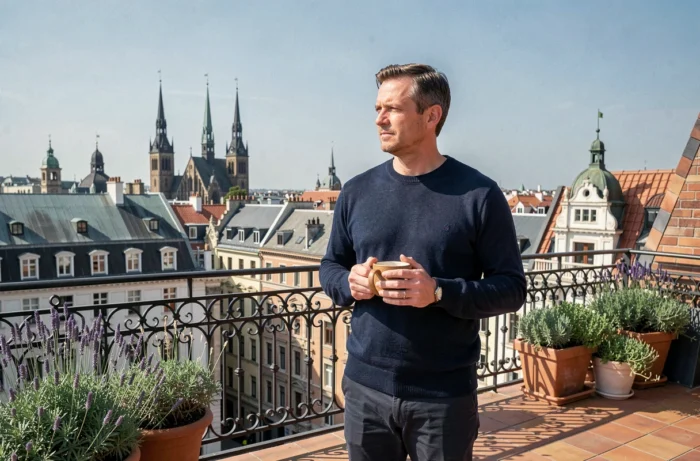
This information has a direct consequence on organizing a day in the city. Two strategies coexist depending on the desired outcome.
- Increase light exposure without skin risk: prioritize outings in the morning (before 11 AM) or late afternoon (after 5 PM), when the sun is present but UV remains low.
- Tan or synthesize vitamin D: the 11 AM-5 PM window is the only truly effective one in Brussels, but it requires sunscreen, sunglasses, and breaks in the shade.
- Engage in outdoor physical activity: the mornings of June and July offer the best compromise between brightness, moderate temperature, and still tolerable UV.
In winter, the UV index remains nearly zero. Outdoor outings still hold interest for morale and natural light, but they do not compensate for the vitamin D deficit without dietary adjustments.
Sun and urban heat island effect in Brussels
Episodes of extreme heat have multiplied in the Belgian capital in recent years. In the city, buildings and mineral surfaces (sidewalks, roads) amplify the perceived temperature. Nighttime does not bring as much coolness as in the outskirts.
This phenomenon, known as urban heat island, alters the way one enjoys the sun in summer. A day at 28 °C in the Sonian Forest feels completely different from the same temperature at the Stock Exchange Square.
The most wooded parks in Brussels, those that combine dense tree cover and bodies of water, offer significantly lower temperatures than the city center. The Bois de la Cambre or the large green spaces in the East outskirts provide concrete alternatives when the mercury rises.
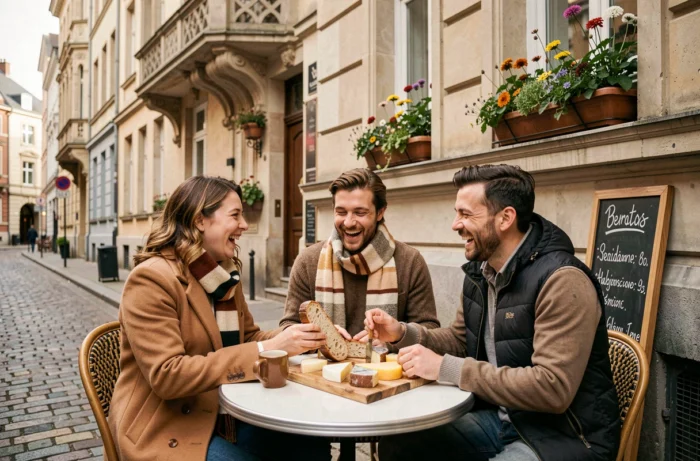
On the other hand, the highly mineralized neighborhoods of the historic center or the European district store heat and release it in the evening. To enjoy the sun without discomfort, shaded terraces in the early morning remain the best compromise.
Adapting outings to Brussels sunshine month by month
The useful sunshine window in Brussels extends from late April to early October, but each segment of this period has its particularities.
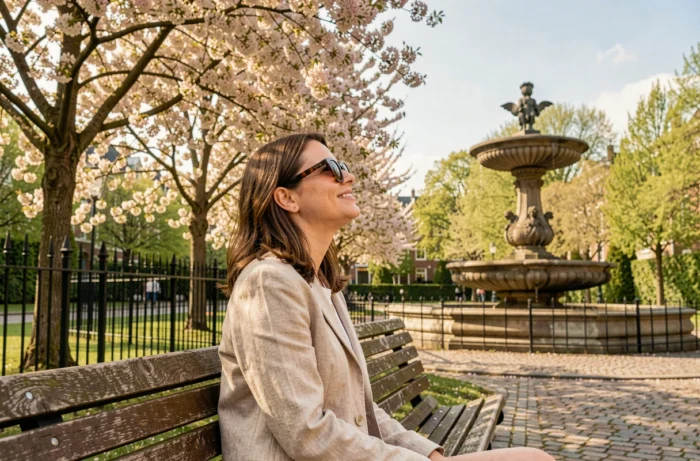
From May to June, the length of the day is at its maximum and temperatures remain pleasant. This is the period when the ratio between sunshine hours and thermal comfort is most favorable. Parks, museums with inner courtyards, and walks along the canal benefit from prolonged low-angle light in the evening.
July and August concentrate the peaks of heat. Sunshine reaches its maximum, but the urban heat island effect necessitates adjustments. Shifting outdoor activities before 11 AM or after 4 PM allows for enjoying the light without suffering from the most aggressive UV or the heat accumulated by concrete.
From September to mid-October, the sun declines but remains present. Days shorten, UV drops below the risk threshold, and the city returns to mild temperatures. This is an underrated period for outdoor activities.
From November to March, the sun becomes scarce. December days offer barely more than an hour and a half of sunshine on average. Relying on natural light then involves location choices: south-facing facades and open squares capture the little available rays.
- Spring (April-June): best sun/comfort ratio, ideal for long walks and terraces.
- Summer (July-August): maximum sunshine but UV vigilance and urban heat, prioritize green spaces.
- Autumn (September-October): soft light, low UV, underrated period for outdoor activities.
- Winter (November-March): rare sun, every clear spell counts, choose locations exposed to the south.
The sun in Brussels follows measurable constraints that do not change from year to year. The average of 4.2 daily hours masks a considerable seasonal imbalance. Adjusting schedules, locations, and protection according to the season remains the most effective lever to make the most of every ray, whether one is a resident or just passing through the Belgian capital.