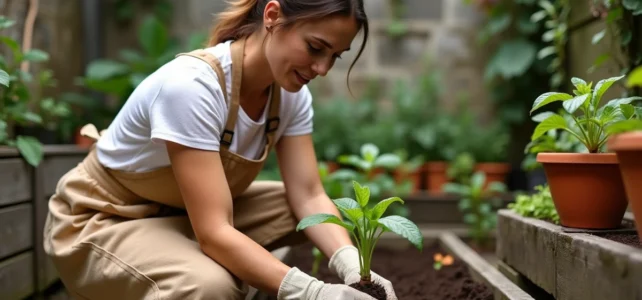
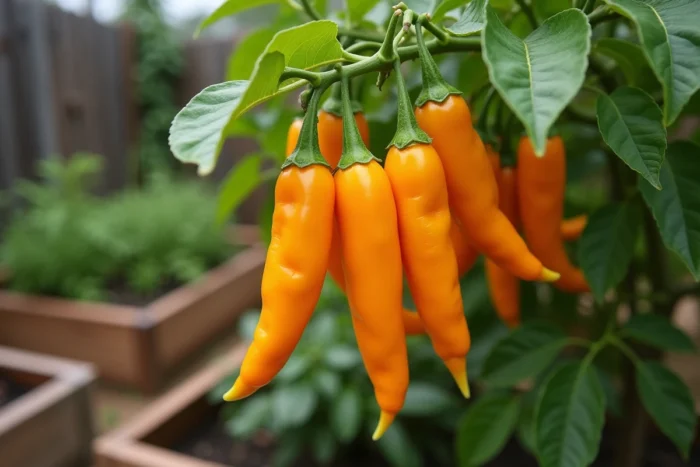
The aji amarillo belongs to the species Capsicum baccatum, native to the Peruvian Andes. Its cultivation in a European temperate climate raises a measurable question: under what conditions does this pepper actually reach fruit maturity outside its native range, and what parameters shift the outcome between a successful harvest and fruits that remain green on the plant?
Aji amarillo and temperate climate: what field reports show
Most cultivation guides treat aji amarillo like any other hot pepper. Feedback from European producers tells a different story.
Observations in a cool oceanic climate, particularly in Normandy, show that aji amarillo fruits form but struggle to fully ripen outdoors, even during summers considered favorable. In a temperate climate, flowering is later, and maturity often shifts to autumn, exposing the harvest to the first cold snaps.
Those looking to understand how to grow aji amarillo at home must integrate this constraint from the start: without thermal protection or optimal exposure, the risk of an incomplete harvest is real.
| Parameter | Open ground (south of France) | Open ground (north of the Loire) | Cold greenhouse or tunnel |
|---|---|---|---|
| Flowering | Summer | Late summer, often late | Summer, several weeks earlier |
| Fruit maturity | Late summer to early autumn | Late autumn, often incomplete | Early autumn |
| Risk of frost before harvest | Low | High | Very low |
| Observed yield | Satisfactory | Variable, often disappointing | Consistent |
This table summarizes the recent trend to favor cultivation in a cold greenhouse or tunnel rather than in open ground in gardens in regions north of the Loire. The yield gap between northern outdoor cultivation and sheltered growing justifies the investment in a lightweight structure.
Soil and exposure requirements for aji amarillo in the garden
Capsicum baccatum tolerates various soils, but the difference in results between a suitable substrate and poorly prepared soil is clear. Three criteria condition growth.
Drainage and soil structure
Aji amarillo does not tolerate standing water at the roots. A compact clay soil causes rapid root rot. Mixing coarse sand or perlite into the planting soil significantly improves drainage.
Exposure and accumulated heat
A south-facing wall or a very sheltered courtyard partially compensates for the thermal deficit of cool regions. The thermal mass of a stone or brick wall releases heat at night, which accelerates ripening. A south-west facing balcony, protected from the wind, also yields good results in pots.
pH and fertilization
A pH between 6 and 7 is suitable. Potassium fertilization at the time of fruiting encourages the transition from green to the characteristic orange color. An excess of nitrogen produces abundant foliage at the expense of fruits.
- Light, draining soil enriched with mature compost at the time of planting
- Regular watering but without excess, allowing the substrate to dry slightly between waterings
- Application of potash (comfrey manure, sifted wood ash) as soon as the first flowers appear
Sowing and transplanting aji amarillo: the calendar that changes everything
Managing the calendar is the main lever to compensate for an insufficiently warm climate. Many gardeners sow too late and harvest immature fruits.
Sowing should start indoors as early as February, on a heating mat or near a stable heat source. Germination of Capsicum baccatum often takes more than two weeks, sometimes three. Waiting until March to sow pushes fruiting too far into the season.
Transplanting outdoors or under cover occurs after the last frosts, usually mid-May in the northern half of France. At this stage, the plants should already measure about fifteen centimeters and have several pairs of true leaves.
- February: indoor sowing at a constant temperature (around 25 degrees), on fine and moist substrate
- March-April: transplanting into individual pots as soon as the second pair of leaves appears
- Mid-May: final installation in open ground, in pots, or under greenhouse, after gradually hardening off the plants outdoors
- June-July: staking when the plant exceeds 40 cm (some baccatum varieties can reach two meters in the first year)
Seed regulations for peppers and varietal choices for 2026
A less visible factor influences the choice of aji amarillo seeds available in Europe. The new European phytosanitary regulations on pepper and bell pepper seeds that came into effect in 2025 specifically target resistance to the tomato brown rugose fruit virus (ToBRFV).
Varieties resistant to ToBRFV are exempt from the phytosanitary passport requirement, simplifying their marketing. Breeders are gradually incorporating these resistances into varieties intended for amateur gardeners. Aji amarillo is not yet explicitly listed among the varieties benefiting from this exemption, but the evolution of the 2026 catalogs is moving in that direction.
Meanwhile, farmer seed associations report a noticeable increase in demand for South American pepper varieties, including aji amarillo. This dynamic is pushing artisan seed networks to offer more lots suited to European growing conditions.
For a gardener starting out, the choice boils down to two options: buy certified seeds from a registered seed supplier, or turn to farmer seed networks that offer locally selected accessions. The second option sometimes provides plants better suited to the garden’s climate, at the cost of less formal varietal traceability.
Aji amarillo remains a demanding pepper in a temperate climate. Success relies on early sowing, appropriate thermal protection, and well-drained soil. Gardeners located north of the Loire who cultivate without shelter expose themselves to partial harvests, regardless of other precautions taken. A lightweight tunnel or cold greenhouse transforms this risky cultivation into reliable production, season after season.