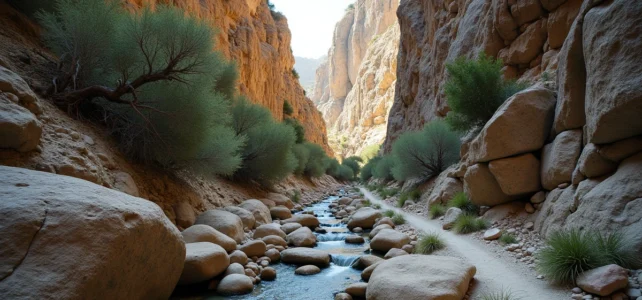
The Samaria Gorge, on the west coast of Crete, forms a canyon of 16 km designated as a national park since 1962. The biodiversity it harbors surpasses that of most comparable Mediterranean gorges. What indicators can measure this richness, and how does tourist traffic weigh on such a fragile environment?
Samaria Gorge compared to other Cretan canyons: the data
Crete has several dozen accessible gorges, but not all enjoy the same level of protection or biological diversity. The table below compares three major sites on the island based on criteria important for an ecosystem.
| Criterion | Samaria Gorge | Imbros Gorge | Agia Irini Gorge |
|---|---|---|---|
| Length of the trail | 16 km | About 8 km | About 7 km |
| Protection status | National park, UNESCO Biosphere Reserve (1981) | No specific national status | No specific national status |
| Presence of kri-kri | Yes (resident population) | No | No |
| Summer visitation | Several thousand hikers per day in July | Moderate | Low |
| Opening period | May to October | All year round | April to October |
The most striking difference concerns the status. The UNESCO Biosphere Reserve label, obtained in 1981, implies scientific monitoring and access restrictions absent from neighboring gorges. This protection has allowed the maintenance of endemic species in an area where human pressure is the highest in Crete.
To delve deeper into the ecosystem of the Samaria Gorge, the fauna and flora that develop there deserve careful reading, as some species are found nowhere else in Europe.
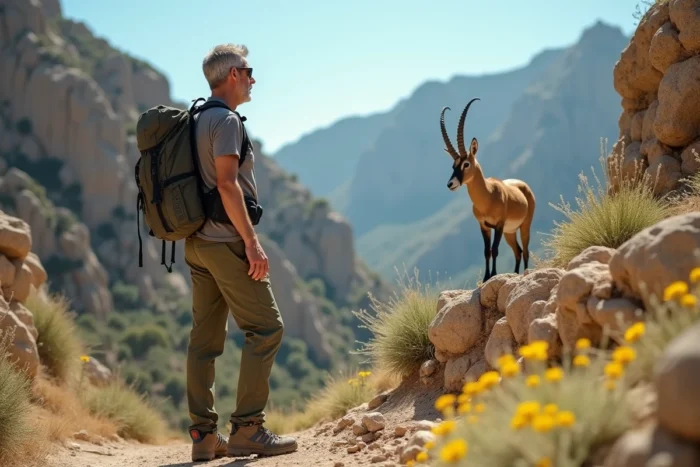
Kri-kri and endemic species: what the national park really protects
The kri-kri, wild goat of Crete, is the symbol of the White Mountains National Park. This species lives exclusively in the gorge area and on a few neighboring islets. Its survival directly depends on the maintenance of an unfragmented ecological corridor along the 16 km of the canyon.
The flora follows the same logic of endemism. The limestone walls, which reach depths of 600 meters in places, create microclimates where plants absent from the rest of the island thrive. The water from the Tarraios River, which carved these gorges over millennia, feeds a rare wet network in such a southern Mediterranean context.
Endemic fauna and flora of the gorges: key elements
- The kri-kri only reproduces in steep rocky environments, away from hiking trails. Its population remains vulnerable to any expansion of trampled areas.
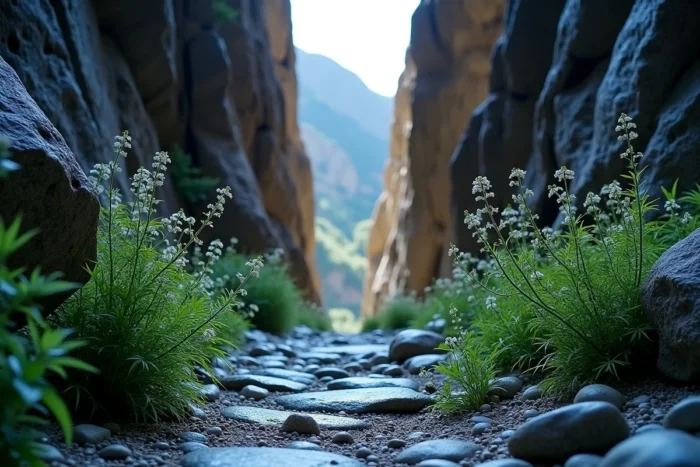
- Several plant species grow only on the cliffs of the White Mountains (Lefka Ori), in crevices where moisture persists even in summer.
- The passage of the “Iron Gates,” only 3 meters wide, concentrates a shaded microclimate that shelters mosses and ferns typical of much more northern environments.
What distinguishes Samaria from other Cretan gorges is the combination of marked elevation, a permanent watercourse, and geographical isolation. These three factors together explain the persistence of species that would have disappeared in a more accessible site.
Tourist pressure in summer: several thousand hikers per day in July
Visitor numbers constitute the main stress factor for the ecosystem. According to Hellenica, the gorges welcome several thousand hikers per day in July, making it one of the most frequented natural areas in Greece. This volume generates concentrated trampling on the central trail, the only permitted route.
The forestry agency imposes strict rules: no leaving the marked path, no smoking (fire risk), and respect for signs indicating rockfalls. These constraints limit direct impact but do not eliminate noise pressure or soil compaction along the trail edges.
When to visit the gorges to limit impact on the ecosystem
The periods of May-June and September-October are recommended to limit human pressure. In spring, vegetation is denser and wildlife is more visible. In autumn, flows decrease after the summer peak, allowing the environment time to recover before the winter closure.
The difference between a visit in July and a visit in May is not just about the comfort of the hiker. It is measured in the number of interactions between hikers and wildlife, the amount of dust raised, and the stress level for species nesting near the trail.
Tourist tax in Greece and funding for the protection of Cretan natural sites
As of January 1, 2025, a new framework for tourist taxation has come into effect in Greece. This system aims to finance infrastructure and protect natural sites. For visitors to Crete, this translates into a contribution integrated into accommodation costs.
The link between this tax and the concrete preservation of the gorges remains to be documented over time. However, the entrance fee to the park has recently changed, beyond the historic price of 5 euros that had long been practiced. This increase reflects a desire to fund trail maintenance and ecological monitoring.
- The Greek tourist tax applies to all accommodations, not just stays near the gorges.
- The entrance fee to the national park is the most direct funding lever for site management.
- The effectiveness of these measures will depend on the actual allocation of revenues towards the conservation of the natural environment.
The Samaria Gorge remains a unique case study in the Mediterranean basin: a 16 km canyon protected by two levels of classification, housing endemic fauna under massive summer pressure. The data that best summarizes the tension between tourism promotion and preservation is the flow of several thousand daily visitors in the height of summer on a single 3-meter-wide trail at its narrowest point.