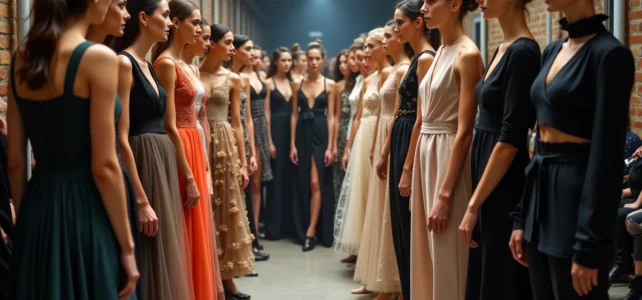
The number of models walking in a fashion show is not subject to any official statistics. Specialized platforms like Tagwalk count the looks presented, not the models hired. This distinction complicates any attempt to establish an average, especially since the formats of fashion shows have diversified significantly in recent years.
Looks presented and models cast: why the count is misleading
A show features a certain number of silhouettes, meaning appearances on the runway. A model can wear two, three, sometimes four different outfits during the same show. Counting silhouettes therefore only provides a high estimate of the actual number of models involved.
This ambiguity explains why estimates circulate without ever converging. A ready-to-wear show presenting around forty looks can very well function with twenty models, or even fewer if the outfit changes are quick. In haute couture, where pieces sometimes require several minutes to dress, each silhouette tends to be worn by a different model.
The figure of models in a fashion show therefore depends as much on backstage logistics as on the size of the collection itself.
Fashion week shows and local shows: incomparable scales
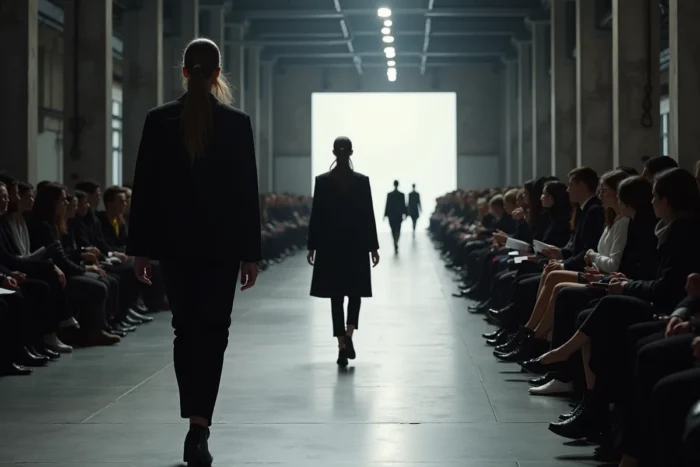
The fashion weeks in Paris, Milan, London, or New York concentrate the most spectacular shows. Major houses regularly mobilize several dozen models for a single appearance. In contrast, shows organized by fashion schools, independent designers, or during local events often operate with much smaller castings, sometimes fewer than ten models.
This gap makes any overall average rather insignificant. Aggregating a Chanel haute couture show and a graduation show from a design school would be like comparing a stadium concert to a conservatory recital.
- Major fashion houses during international fashion weeks often mobilize several dozen models, with one appearance per silhouette
- Mid-sized ready-to-wear brands frequently operate with around twenty models who quickly change outfits
- School shows, collectives, or regional events run with a limited casting, sometimes fewer than ten people
The format of the show determines the number of models far more than any industry standard would.
Sustainability and simplicity: the pressure that reduces castings
In recent years, environmental concerns have changed the production practices of fashion shows. Isabelle Lefort, co-founder of Paris Good Fashion, emphasizes that houses are pushed to rethink how they produce and present their collections, with a desire to limit waste and overly resource-heavy events.
This dynamic of logistical simplicity (fewer venues, fewer looks, less transportation) has mechanically tended to reduce the number of models mobilized per show compared to the previous decade. The collections presented are shorter, which reduces the need for models.
The available data do not allow for precise measurement of this decline, due to a lack of systematic recording. Field reports vary on this point depending on the segments: haute couture maintains broad castings to preserve the spectacle, while ready-to-wear and young brands absorb this logic of reduction more directly.
Production budget and casting size: a direct link
Each model represents a cost: fees, transportation, possible accommodation, makeup, hairdressing. For an independent designer or an emerging brand, the production budget conditions the casting as much as the artistic vision.
Reducing the number of models is the most immediate budgetary lever to control the overall cost of a show. A show with a budget starting at a few tens of thousands of euros cannot afford the same casting as a house that invests several hundred thousand euros in its presentation.
This financial constraint pushes some brands towards alternative formats: static presentations where models remain in place while the audience circulates, collection videos streamed online, or hybrid shows combining a few live appearances with projections.
Runway model and top model: different casting profiles
The casting of a show is not just about lining up known names. The majority of models walking during fashion weeks are not media faces. Modeling agencies provide varied profiles, selected based on the silhouette sought by the artistic director, the theme of the collection, and the available budget.
- Recognized top models are generally reserved for the opening or closing of the show, to maximize media impact
- Models referred to as “new faces” make up the majority of the casting during fashion weeks
- Local or school shows often call upon non-professional models or those at the beginning of their careers
The fame of models is not correlated to their number in a given show. A show may mobilize few models but bet on profiles with high visibility, or conversely align dozens of lesser-known faces for a mass effect.
The question of the number of models per show therefore remains without a single answer. It varies according to the segment (haute couture, ready-to-wear, independent fashion), the location (international fashion week or local event), the budget, and the artistic direction. No industry database publishes a reliable average, and current trends towards shorter collections and more sober productions suggest that excessive castings are gradually becoming the exception rather than the norm.